Ollantaytambo

On our way to Machu Picchu, we spent the night at another Incan town with ruins called Ollantaytambo. It's a fun name to say. We left most of our stuff at Bill's and took only what we needed for the next two days. This was a huge convenience. We walked to a different bus stop in Cusco for transportation to this town. The same rules applied for getting a ride as Pisac, but the bus was more like a large van since the distance is further and less people seem to go daily. We also waited much longer to leave because we just missed the last departure. This trip was more expensive too - 10 soles per person or about 4 dollars for the four of us. 

The trip out of Cusco gave us a pretty good view of the poverty level. Houses were dilapidated. There were far more stray dogs and garbage filled many parts of the roadside. About thirty minutes later I began to worry more about our safety. Our driver was crazily navigating his way along the road. Apparently that's the reputation they have along this route, but I found that out after the trip. I seriously almost yelled in Spanish, "I want to live." He passed so many cars on blind turns, it was ridiculous.  

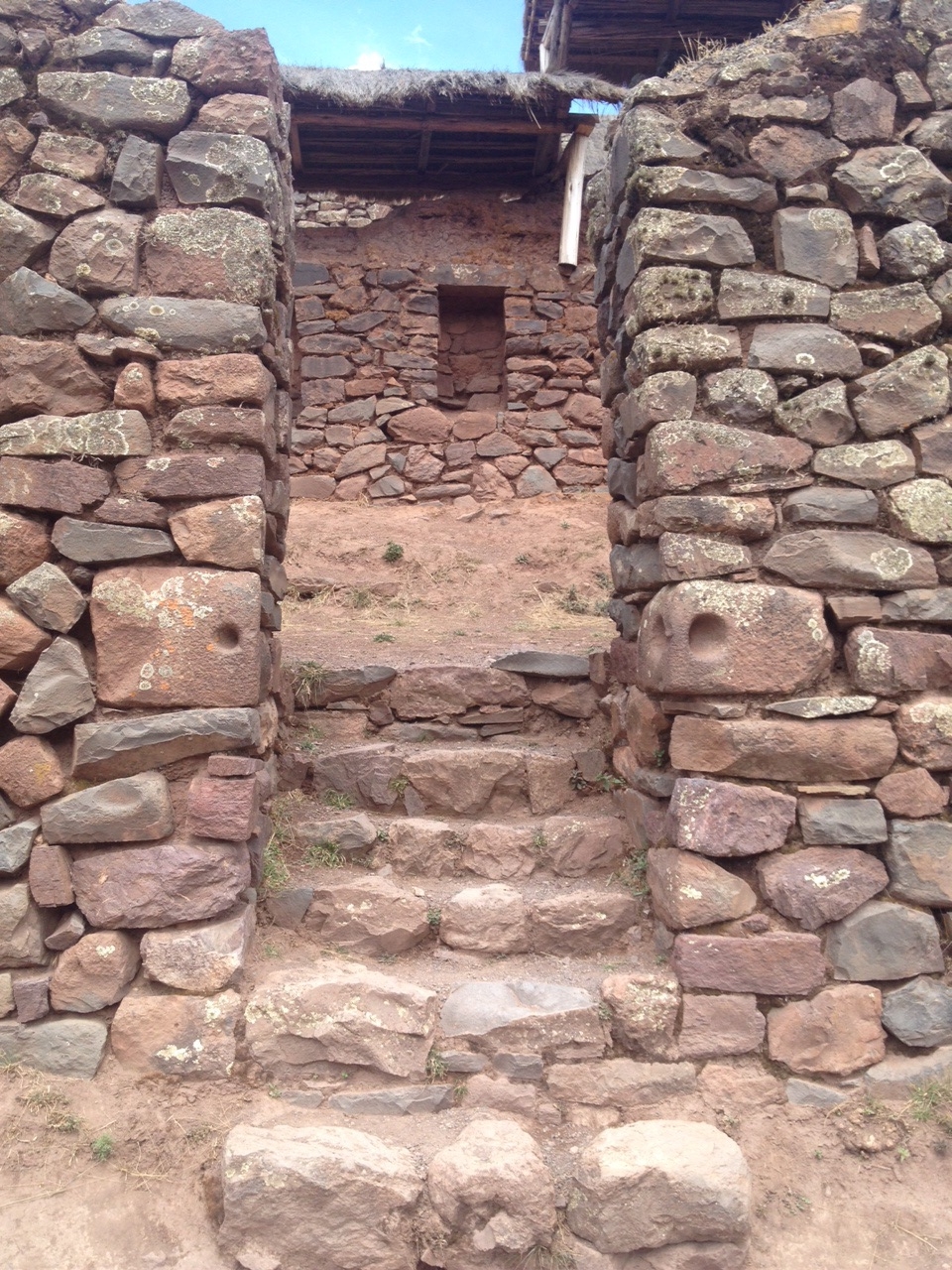
We happily survived the two hour ride to this lovely, quaint town. The roads were unpaved and more like cobblestone. The town has the oldest continuously occupied dwellings in South America. Some, however, were altered. 

Terraces and ruins in background of city

Terraces and ruins in background of city

The town is surrounded by a hill with more impressive terraces and ruins. While the ruins were called a fortress, they actually contained a religious temple. These ruins were included on our previously purchased ticket, but we didn't have time that day to explore them. We could see much of it from town so we decided to explore the local sites after lunch. 

Incan aqueduct still effective. 

Incan aqueduct still effective. 

Walking through town

Walking through town

center of town

center of town

Even though this is a small town, it took us a while to find our hostel. It was very basic. The people running it are volunteers and work for a charity called My Little Help. They help local children and their families in Peru and also in Nepal. It was founded by Leander Hollings who we had the privilege of meeting along with Mayra who coordinated our stay. We were able to witness some of the benefits of their efforts during our stay. There were some young children visiting the hostel while we were there. Two girls were close to Liam's age. They said they had never seen a gringo boy before and they thought he was beautiful. It was fun to see them become silly around him; a behavior that trancends cultures. 
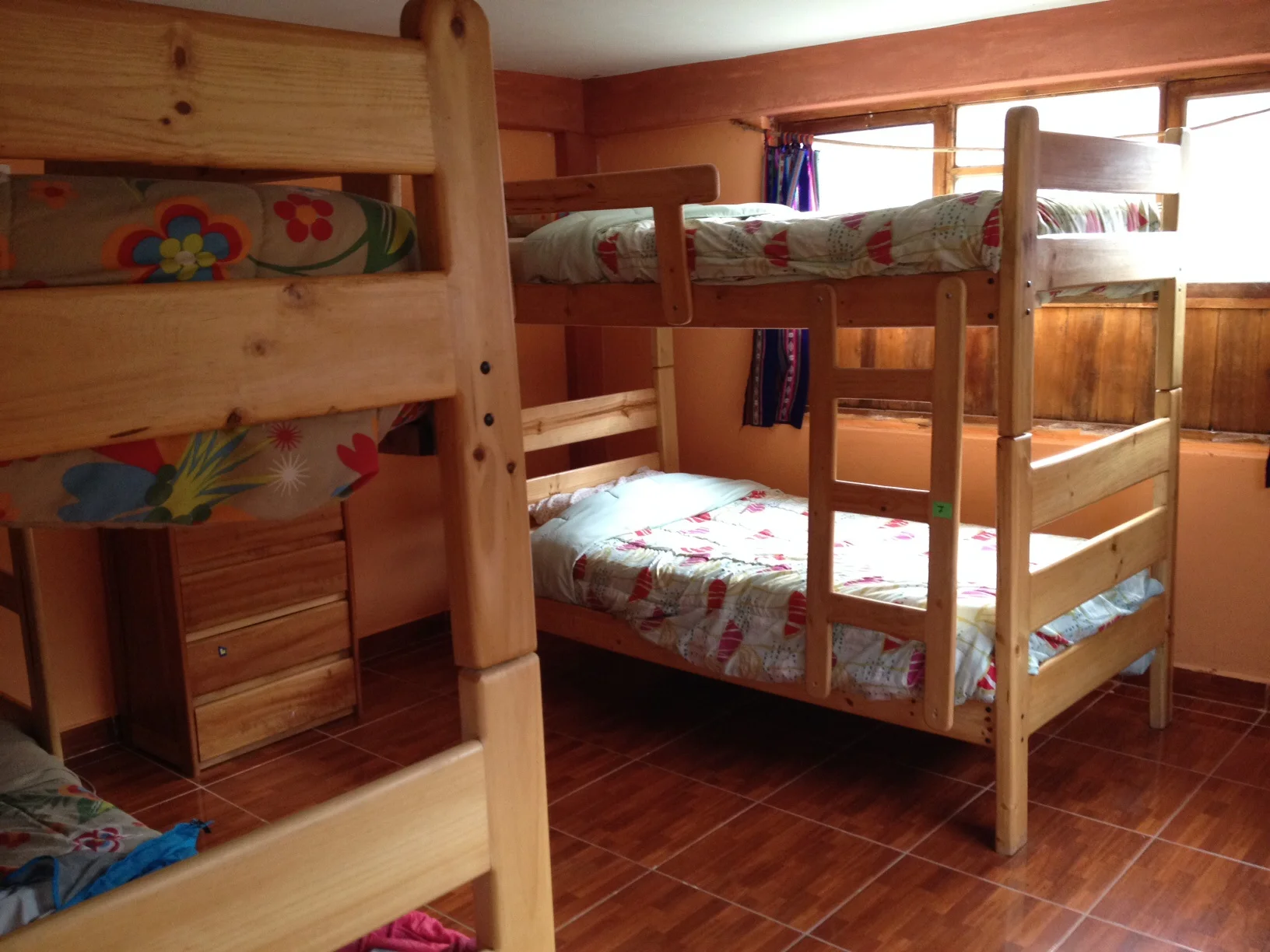
our accommodations

our accommodations

Our view from our room. We can see more ruins and you can hike this area for free. 

Our view from our room. We can see more ruins and you can hike this area for free. 

We had lunch at a great place that also supports local charities. Their food was organic and there were many vegetarian options. While we were eating we heard pound marching band-like music. We went to the window and saw this demonstration or parade of locals. There has been an election process in Peru. We've seen signs and billboards advertising the candidates and their positions all over Peru. In this area they painted candidate names on walls and posted pictures of how they wanted you to vote. Bill told us that the visual illustrations were for the benefit of the illiterate citizens of Peru. The election was two days away and apparently things ramped up with an increase of people partying. I hoped it would be a quieter night since it was a Sunday. 

Part of the political parade

Part of the political parade

It was quite a crowd of local people who dress more traditionally here than Cusco. 

It was quite a crowd of local people who dress more traditionally here than Cusco. 

Girls in traditional attire in town center

Girls in traditional attire in town center

More ruins in the background. 

More ruins in the background. 

Back at the hostel we met Leander's baby daughter. Maeve and Liam were sources of entertainment for her. Well, I think the feeling was mutual. 

Garden area of our hostel

Garden area of our hostel

Liam playing  with  one of the volunteer's daughter.  Such a sweet moment. 

Liam playing  with  one of the volunteer's daughter.  Such a sweet moment. 

After exploring and getting settled, we decided to turn in early. We had an early start in the morning.....Machu Picchu!

In

Pisac

Pisac is another Incan site in the Sacred Valley about 35 km or just over an hour from Cusco. We walked to the bus station that is only for Pisac or towns along that route. The way it works is that you show up, see the man yelling "Pisac, Pisac, Pisac!!", nod yes, get in the bus, and when it is full, it leaves. In our case this process took less than one minute. The entire ride there for four cost 12 soles or four US dollars.  It was an interesting ride full of locals and stops. The seats were comfortable and I was expecting far worse in terms of comfort and odors.

We arrived at the base of the town of Pisac and were greeted by the usual taxi trolls. We declined and went to the town's main square. There were over 100 stalls selling typical tourist trinkets. There were more locals requesting your presence at lunch in their restaurant or wanting you to purchase their artwork.

The path to walk up to the ruins is behind the square and takes over an hour to hike. The road up for taxis has a lot of switch backs and takes about 20 minutes. It also costs about 15 dollars. So we turned around and headed back toward the taxi dudes. 

Base of town, many Incan towns still have these ducts that carry water throughout 

Base of town, many Incan towns still have these ducts that carry water throughout 

markets and stairs to hike up in background

markets and stairs to hike up in background

First views at the top

First views at the top

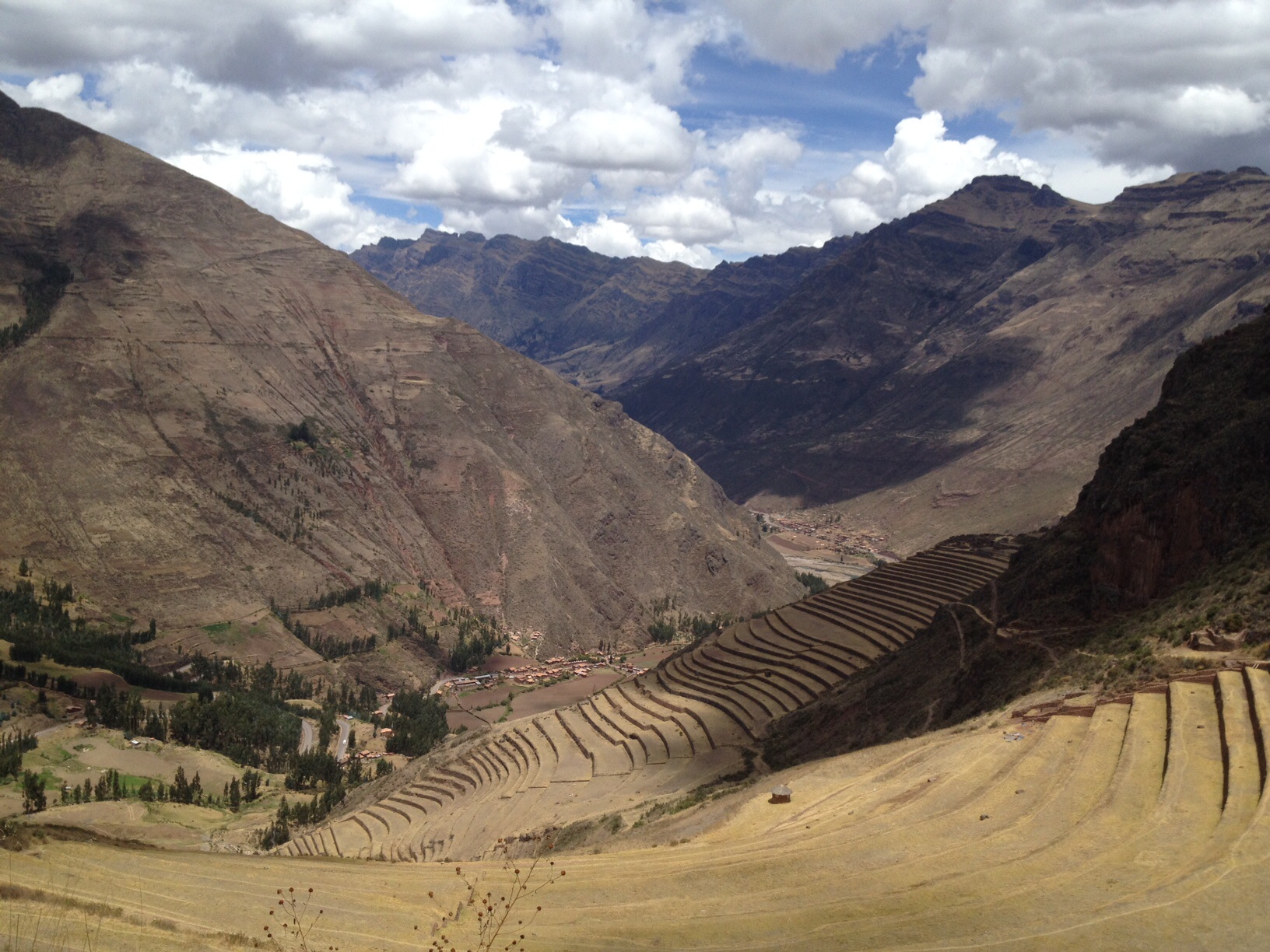
Pisac (pisaca) means partridge so the layout of this city is supposed to resemble a bird (whereas Cusco's shape is that of a puma). No one seems to know the exact function of Pisac, but they say it had all types of architecture-agricultural, hydraulic, military, residential and religious. The stand out feature for these ruins are the terraces. There are about 500 and were used for growing corn, potatoes and quinoa from bottom to top. 

image.jpg
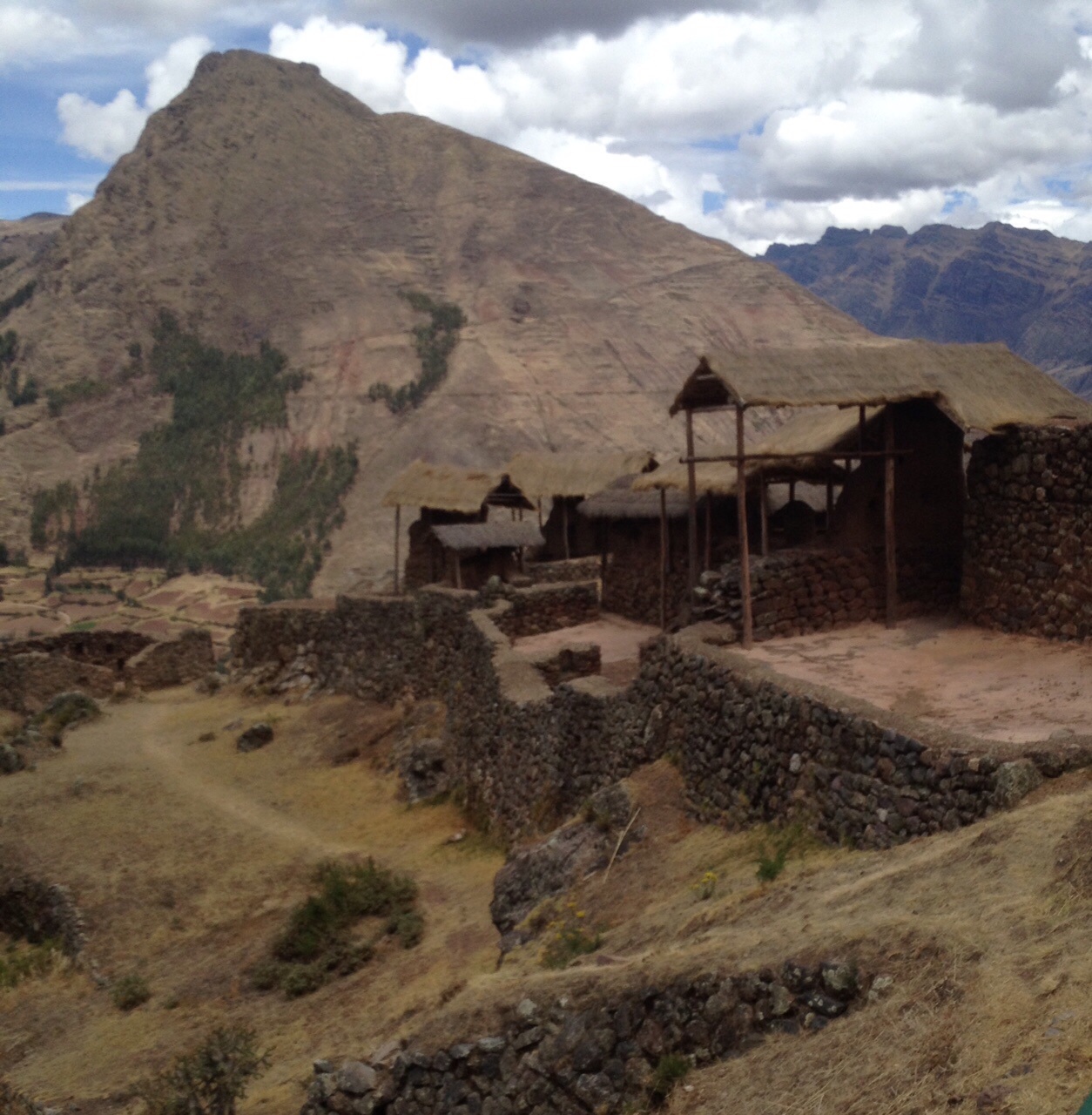
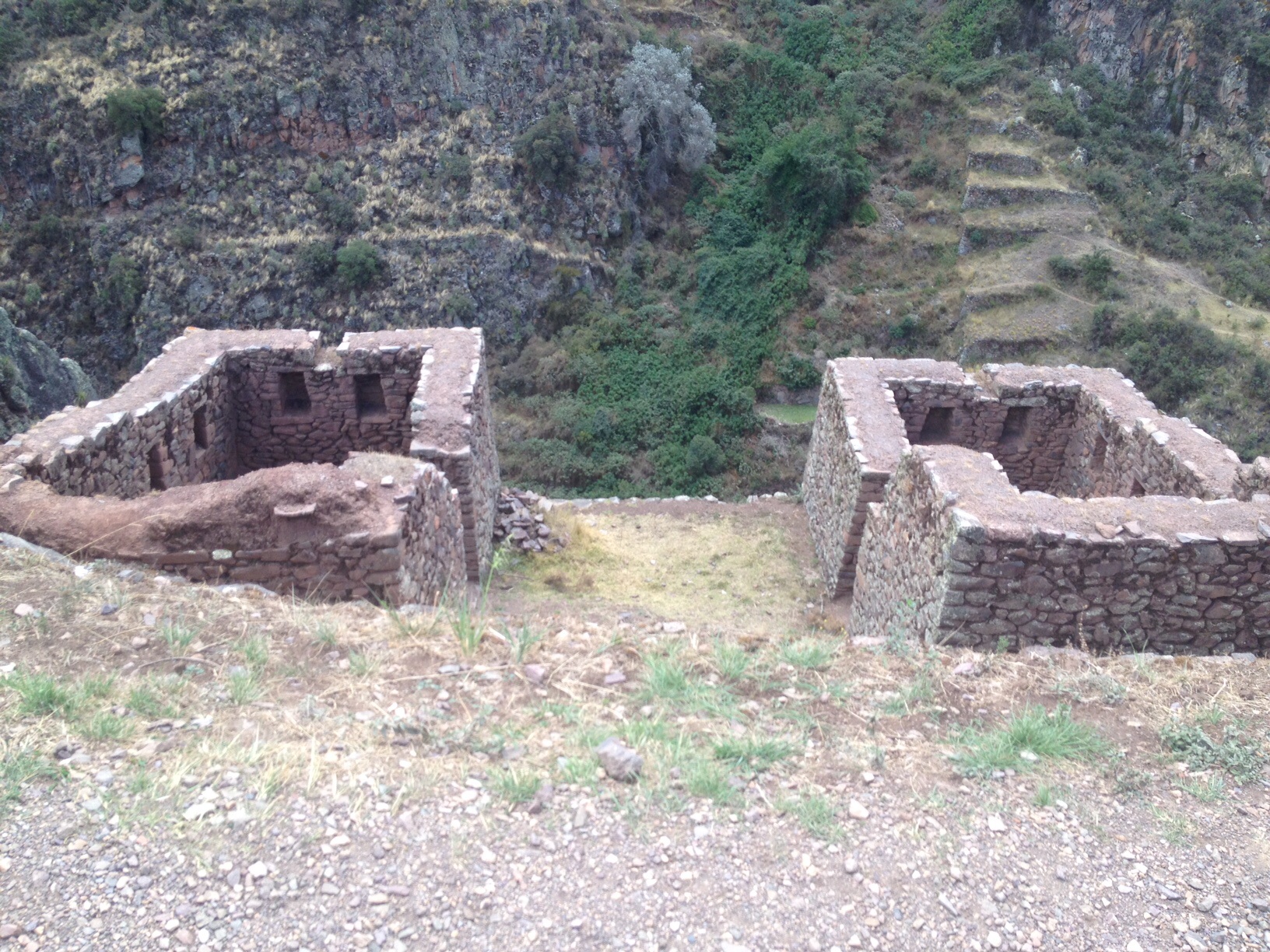
The sites and residences we explored beyond the terraces. 

The sites and residences we explored beyond the terraces. 

More views of terraces from the other side of the entrance

More views of terraces from the other side of the entrance

image.jpg
image.jpg
image.jpg

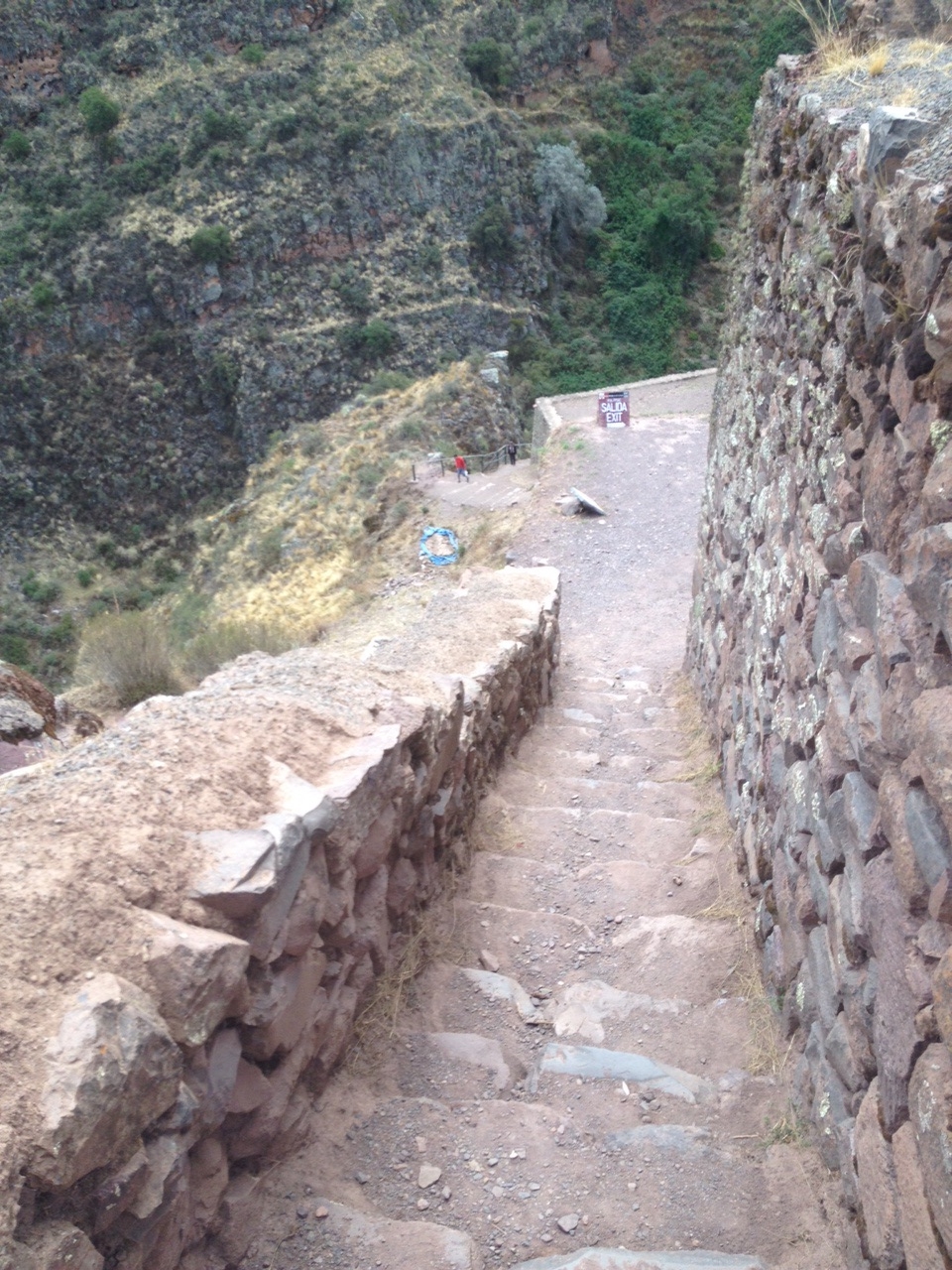
We walked all through the extensive residential areas. There were tons of stairs, so we definitely got our exercise even without the lengthy hike up. One still has to marvel at how these 'cities' were built at such heights on hills. 

Lots of stairs

Lots of stairs

Lots of hills

Lots of hills

An amazing view with more terraces

An amazing view with more terraces

Some residential structures remain

Some residential structures remain

image.jpg
Another successful excursion

Another successful excursion

In

Sexy Woman

Peru is known for its many Incan ruins. I just had no idea how many sites there actually were. Many were destroyed by the Spaniards, but quite a few reminders of the Incan civilization remain. We purchased a pass to see about about 10 sites in the larger Cusco area for one big price. It seems to be worth it if you end up visiting two or three sites. Of course, it does not include Machu Picchu. 

The first site we visited was Sacsayhuaman. When pronounced it sounds very much like 'sexy woman' so that's what we all called it. It's just north of historical Cusco (the former capital of the Incan Empire) and you can hike up from the city center or take a taxi. Yes, we chose the taxi. In my defense, I was able to get the family to walk back down. 

We went here first on Bill's recommendation. He said it would be most appealing to children. Even though we are on the road as a family, exploring foreign countries and wonders, we'd still hear, "But I don't want to go." And during the experience, they always had a good time. This was no exception. 

We turned down the offers at the site for a personal guide. This is a fairly large site, so we decided to explore on our own. It's built like a fortress (but could have been a temple to worship the sun) with three levels. There are several theories, but no real proof on how these structures were built. The size of the limestone rocks, how they were brought from a quarry 3km or more away, carved, lifted and fit together perfectly with no mortar like a jigsaw puzzle is still baffling. They say the complex was 'finished' in 1508. It took from 20,000 to 30,000 laborers about 70 years to complete. However, others suggests the foundation was started much earlier earlier (pre Incas 900-1200AD) and just completed in 1508 since there are no real accounts of how the base stones were cut and placed. 

image.jpg
Hills opposite the ruins

Hills opposite the ruins

Cusco in valley. A decent hike. 

Cusco in valley. A decent hike. 

The reason this is most appealing to children is because there are a few 'rock slides'. The rock sizes and natural formations are a marvel. The hills are called Rodadero, just opposite of Sacsayhuaman and are made of an igneous rock called diorite. They are smooth as if carved by a glacier and have stairs and benches carved into them. Of course, leave it to humans to turn it into a playground. I was just happy that this history lesson yielded a bit more fun for the kids. There was even a tunnel within the ruins. It was pitch black and the kids wouldn't continue unless I turned on my flashlight app. Ah, technology. 

image.jpg
Entering the tunnel

Entering the tunnel

Perfect timing since a bus load of tourists had arrived just after this and lines began to form. 

Perfect timing since a bus load of tourists had arrived just after this and lines began to form. 

Just a nice moment I had to include

Just a nice moment I had to include

A better view of the walls...and Maeve. 

A better view of the walls...and Maeve. 

More walls and Michael protecting himself from blazing sun at 12,000 ft. 

More walls and Michael protecting himself from blazing sun at 12,000 ft. 

The Spaniards began destroying this site in the 1500s. They took many of the rocks to build a new city leaving only the largest behind since they were unmovable. No wonder since some boulders are 8 meters high and weigh over 200 tons.

image.jpg
The road back to Cusco

The road back to Cusco

A bid farewell from an alpaca-mostly locals at the exit trying to get more money from tourists

A bid farewell from an alpaca-mostly locals at the exit trying to get more money from tourists

In